Source Shock Absorbing Rigid Casters with Brake for Tool Carts
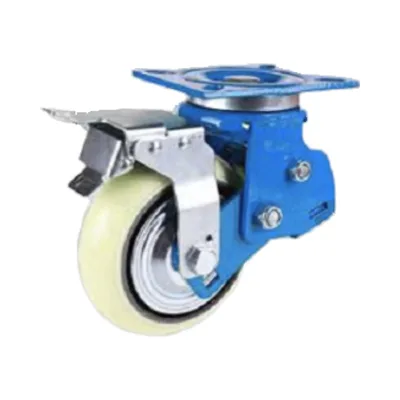
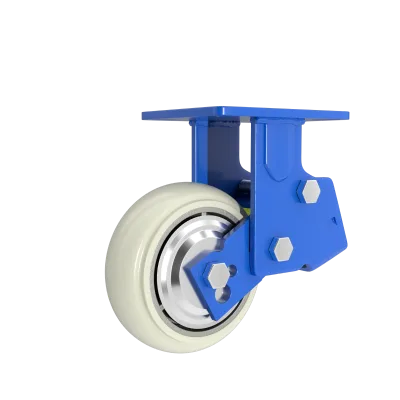
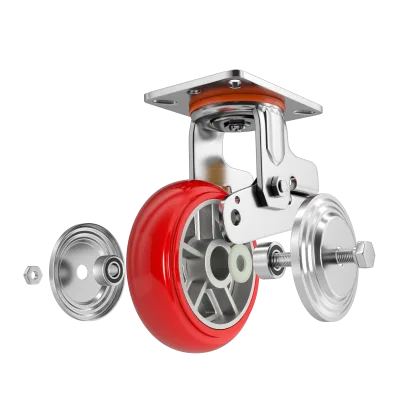
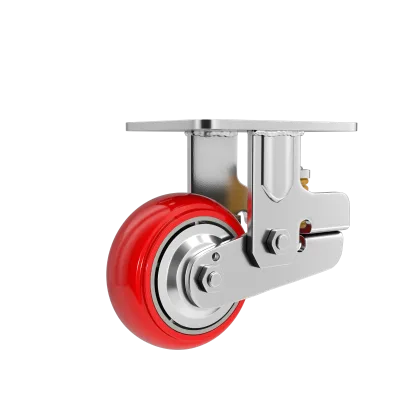
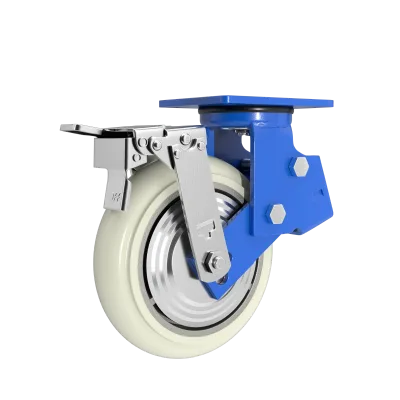
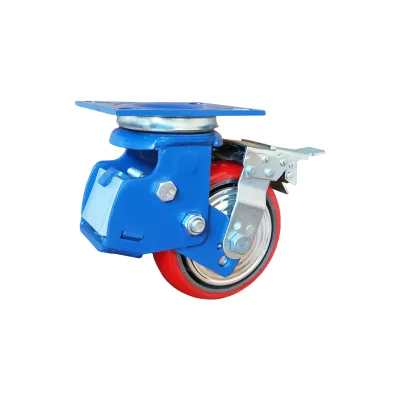
Find shock absorbing rigid casters with brake options for tool carts, industrial trolleys, and warehouse logistics. Compare 30 products featuring steel, rubber, and nylon wheels in sizes from 1.5 to 8 inches. Evaluate braking mechanisms and mounting types to select the right caster for your specific load and mobility requirements.
Key considerations
Products List






Comprehensive Sourcing Guide
Shock Absorbing Rigid Casters with Brake Sourcing Guide
Procurement teams must first distinguish between rigid and swivel configurations when selecting shock-absorbing casters, as the supplied data indicates specific models like the 113011 and 113235 are available in both brake-equipped and non-brake variants. Buyers should verify whether the "rigid" designation applies to the wheel stem or the entire caster assembly, ensuring the selected unit matches the load-bearing requirements of tool carts or industrial platforms without introducing unnecessary swivel friction.
The observed product range includes steel, hard rubber, nylon, and PU wheel materials, each offering distinct shock absorption characteristics for different floor conditions. While some listings specify iron color or black finishes, the critical decision lies in matching the wheel hardness to the environment; softer materials like hard rubber or PU provide superior vibration dampening for rigid frames, whereas steel wheels offer durability on smooth surfaces but transmit more shock to the load.
Product Scope and Observed Listing Signals
The market data reveals a clear segmentation by wheel diameter, with specific model numbers like 113011 covering 1.5 to 3-inch sizes and models such as 154404 addressing the 4 to 8-inch range. Buyers must carefully cross-reference the required wheel size with the available standard, noting that smaller casters often utilize zinc-plated steel stems while larger units may feature different mounting heights or plate sizes that require specific drawing references for installation.
Listing signals indicate that customization is available across various material types, including powerd rubber and TPU, allowing for tailored solutions in color and finish. However, procurement teams should treat these observations as available options rather than universal features, verifying that the specific shock-absorbing capability is inherent to the wheel material rather than an added feature, as the core product definition relies on the wheel composition to manage impact forces.
Technical Specifications to Verify
Verification of the bearing type is essential, as the supplied facts explicitly mention ball bearings for certain models, which directly influences the smoothness of movement and the efficiency of the braking mechanism. Buyers should confirm that the bearing assembly is sealed and rated for the intended load, ensuring that the shock absorption provided by the wheel does not compromise the rotational integrity of the caster under heavy dynamic loads.
Mounting specifications require precise attention to the top plate size and bolt hole pattern, which are often referenced in accompanying data sheets rather than listed as fixed dimensions in general catalogs. The mounting height and tread width, such as the 48mm width observed in specific listings, must align with the equipment frame to ensure the brake engages correctly and the caster remains stable during sudden stops or impact events.
Compliance and Safety Documentation
Safety documentation must confirm that the braking system meets the specific operational standards for the intended application, such as the 2-inch brake with rotating wheel configuration noted in the data. Buyers should request test reports or certification records that validate the brake's ability to hold the rated load on inclined surfaces, ensuring that the shock-absorbing properties of the wheel do not interfere with the locking mechanism's reliability.
While some listings reference SGS standards, procurement teams must verify that these certifications apply to the specific batch of shock-absorbing casters being purchased rather than general product lines. It is critical to ensure that the surface treatment, such as zinc plating, provides adequate corrosion resistance for the operating environment, as rust can degrade the brake performance and the structural integrity of the caster over time.
Cost Drivers and Commercial Terms
The minimum order quantity (MOQ) varies significantly across the product range, with some listings indicating an MOQ of 2000 pieces while others suggest lower thresholds, directly impacting the unit cost and inventory strategy. Buyers should analyze the trade-off between volume discounts and the flexibility to order smaller batches of specialized shock-absorbing casters, particularly when dealing with mixed material requirements like steel, rubber, or nylon wheels.
Packaging methods, ranging from cartons to individual bags, influence the logistics cost and the condition of the goods upon arrival, especially for casters with delicate brake mechanisms. Procurement teams must factor in the cost of protective packaging to prevent damage during transit, ensuring that the shock-absorbing features and brake components remain functional and undamaged when the goods reach the final destination.
Supplier Qualification and Quality Control
Supplier qualification should focus on the manufacturer's ability to consistently produce casters with the specified wheel materials and surface treatments, such as zinc plating or specific color finishes like grey or blue. Buyers must assess the supplier's quality control processes for maintaining the integrity of the brake assembly and the wheel material, ensuring that the shock-absorbing properties are consistent across all units in a production run.
Quality control checks should include random sampling to verify the mounting dimensions and bolt hole patterns against the provided drawings, as discrepancies can lead to installation failures. It is also vital to confirm that the supplier adheres to the stated origin, such as China or PRC, and can provide traceability for the raw materials used in the wheel and stem construction to guarantee long-term performance.
Long-Term Procurement Checks
Long-term procurement strategies must account for the wear characteristics of different wheel materials, as hard rubber and nylon offer varying lifespans depending on the floor surface and load frequency. Buyers should establish a replacement schedule based on observed wear rates, ensuring that the shock-absorbing casters are replaced before the brake mechanism fails or the wheel becomes too worn to provide adequate vibration dampening.
Regular audits of the installed casters should verify that the brake engagement remains effective and that the mounting hardware has not loosened due to vibration. Procurement teams should maintain a relationship with the supplier to monitor updates in product standards, such as the 1.5 to 3-inch cast-iron caster specifications, to ensure that future orders continue to meet the evolving safety and performance requirements of the facility.
FAQs
What wheel materials are available for rigid casters with brake?
Available wheel materials include steel, hard rubber, nylon, and polyurethane (PU). Steel options feature zinc plating for corrosion resistance. Hard rubber variants offer shock absorption. Nylon and PU wheels provide smooth rolling on hard floors. Each material suits different load and floor conditions.
Can I customize the caster specifications for my application?
Yes, customization is available for these casters. Buyers can select specific wheel sizes ranging from 1.5 inches to 8 inches. Options include different brake configurations and mounting types. Customization allows tailoring the product to specific industrial or commercial requirements effectively.
Which wheel sizes are offered for these rigid casters?
Wheel sizes range from 1.5 inches to 8 inches. Smaller sizes like 1.5 to 3 inches are available in steel, rubber, nylon, and PU. Larger sizes from 4 to 8 inches are offered in nylon. Specific 4-inch rubber options are also listed.
What surface treatments are applied to the steel casters?
Steel casters undergo zinc plating for surface treatment. This process enhances durability and resistance to rust and corrosion. The finish ensures longevity in various environments. The iron color remains visible beneath the plating, providing a standard industrial appearance for heavy-duty applications.
How are these casters packaged for shipping?
Packaging options include cartons and bags. The specific packing method depends on the product model and order quantity. Cartons are used for standard models, while bags may be used for specific variants. Proper packaging ensures protection during transit and storage for international shipments.
What is the typical origin of these caster products?
These casters originate from China. The manufacturing base supports a wide range of materials and sizes. Sourcing from this region provides access to diverse supplier capabilities. Buyers should verify specific factory details and lead times when placing orders for bulk quantities.